
 Timothee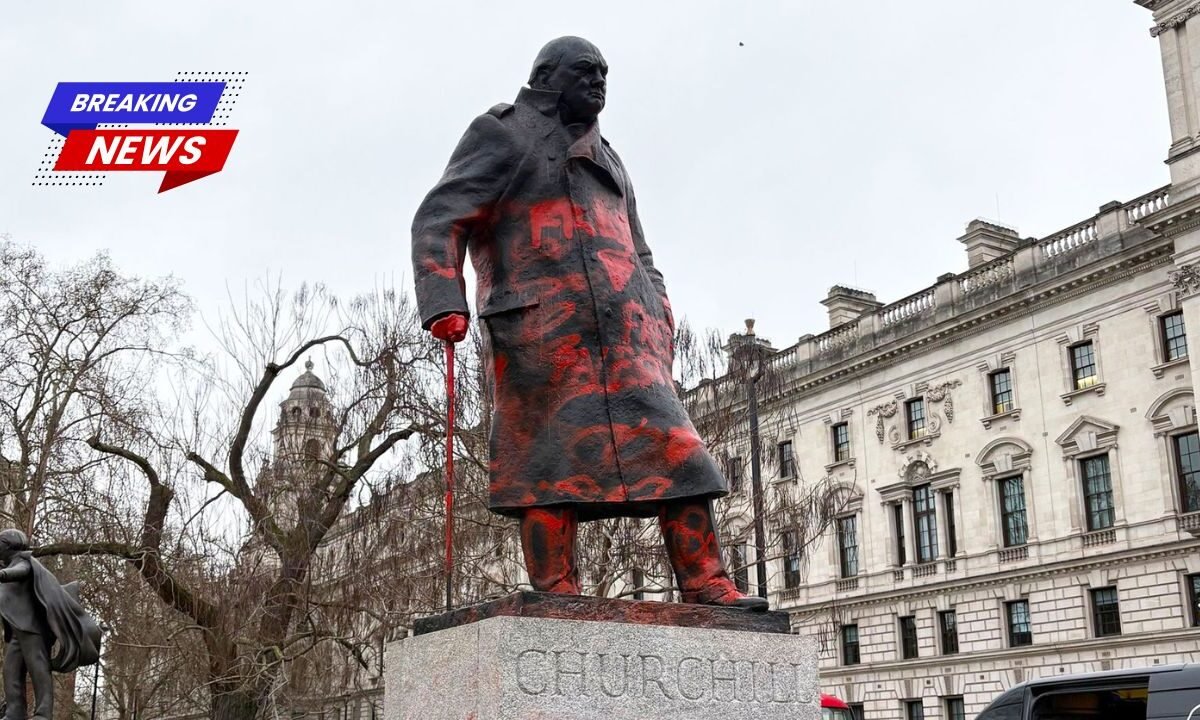
An individual has been formally charged after graffiti was discovered on the statue of Sir Winston Churchill in Parliament Square, one of London’s most historically significant public spaces. The incident has once again drawn attention to the protection of national monuments, the legal consequences of vandalism in the United Kingdom, and the ongoing public debate surrounding historical figures and public memorials.
The statue, which stands prominently in Parliament Square, is a powerful symbol of Britain’s wartime leadership and political heritage. Authorities responded quickly after the vandalism was reported, leading to an investigation and subsequent charges.
What Happened in Parliament Square?
Discovery of the Graffiti
The graffiti was found on the statue of Sir Winston Churchill, located in Parliament Square, directly opposite the Houses of Parliament. The monument, which commemorates the former British Prime Minister, was visibly defaced with spray paint.
Police were alerted shortly after the markings were noticed. Officers secured the area and began reviewing surveillance footage from cameras positioned around the square, which is heavily monitored due to its proximity to government buildings.
Police Response and Investigation
The Metropolitan Police Service confirmed that an individual had been identified and later charged in connection with the damage. Authorities treated the matter as criminal damage to a protected public monument.
Law enforcement officials stated that protecting statues and memorials in central London remains a priority, especially those located near government institutions.
Who Was Sir Winston Churchill?
A Defining Figure in British History
Winston Churchill served as Prime Minister of the United Kingdom during World War II and is widely credited with leading Britain through one of its most challenging periods. His speeches and wartime leadership remain central to British national identity.
The bronze statue in Parliament Square was unveiled in 1973 and has since become a focal point for remembrance ceremonies, protests, and national events.
A Statue That Often Becomes a Target
In recent years, the Churchill statue has occasionally been at the center of public demonstrations. During periods of protest, it has been vandalized or temporarily covered to prevent damage. The latest graffiti incident renews questions about how historical monuments should be protected in modern democratic societies.
Legal Consequences of Graffiti on Public Monuments
Criminal Damage Laws in the UK
Under UK law, vandalizing public property can result in criminal charges. When the property in question is a nationally significant monument, the case can attract heightened scrutiny.
Below is a summary of potential legal outcomes in cases involving vandalism of protected statues:
| Offense | Legal Classification | Possible Penalty |
|---|---|---|
| Graffiti on public property | Criminal Damage | Fine or imprisonment |
| Damage to listed monument | Aggravated Criminal Damage | Higher fines, longer sentences |
| Repeat offense | Escalated Charges | Increased penalties |
Courts may also consider factors such as intent, previous criminal record, and the cost of restoration.
Restoration and Cleanup Efforts
Specialist conservation teams are often required to remove graffiti from bronze statues. Cleaning must be done carefully to avoid permanent surface damage. In this case, local authorities acted quickly to ensure the statue was restored to its original condition.
The Broader Debate: History, Protest, and Public Memory
Why Are Historical Statues Targeted?
Across the UK and other countries, public monuments have become symbolic focal points in political and cultural debates. Critics sometimes argue that statues represent outdated or controversial aspects of history. Supporters, on the other hand, emphasize their educational and commemorative value.
The Churchill statue in Parliament Square stands alongside monuments to other notable leaders, making the square both a historical landmark and a political gathering space.
Balancing Free Expression and Heritage Protection
While peaceful protest is protected under UK law, defacing public property crosses into criminal territory. The recent charge underscores the distinction between lawful demonstration and criminal damage.
Government officials have repeatedly stressed the importance of safeguarding national heritage sites, particularly those in areas of high symbolic importance like Parliament Square.
Why Parliament Square Matters
Parliament Square is not just a tourist destination; it is a space deeply embedded in the United Kingdom’s political life. Situated next to the Houses of Parliament and near Big Ben, it frequently hosts rallies, demonstrations, and public gatherings.
The statues within the square represent figures who shaped both British and global history. Damage to any of these monuments typically generates strong reactions from the public and political leaders alike.
Public and Political Reactions
Public responses to the graffiti incident have been mixed. Some view the act as unacceptable vandalism of a national hero’s monument. Others frame it within a broader conversation about how societies remember complex historical figures.
Political leaders have condemned the defacement, calling for accountability and stronger protections for cultural heritage sites. Meanwhile, conservation experts emphasize the importance of preventive measures, including surveillance and protective coverings during large-scale demonstrations.
Ongoing Protection of UK Monuments
Following previous incidents involving statues in central London, authorities have increased monitoring and, in some cases, installed temporary barriers. Parliament has also debated stricter penalties for vandalism of memorials.
The charge in this case signals that enforcement efforts remain active and that individuals responsible for graffiti on protected monuments may face serious legal consequences.
Conclusion
The charging of an individual after graffiti was discovered on the statue of Sir Winston Churchill in Parliament Square highlights the ongoing tension between public expression and the protection of national heritage. While debate about historical figures continues, the legal framework in the United Kingdom makes clear that vandalizing public monuments constitutes criminal damage.
As Parliament Square remains both a symbol of democracy and a stage for political expression, authorities are likely to maintain strict oversight to ensure its statues and memorials are preserved for future generations. The case serves as a reminder that historical monuments carry deep national significance—and damaging them carries real legal consequences.